

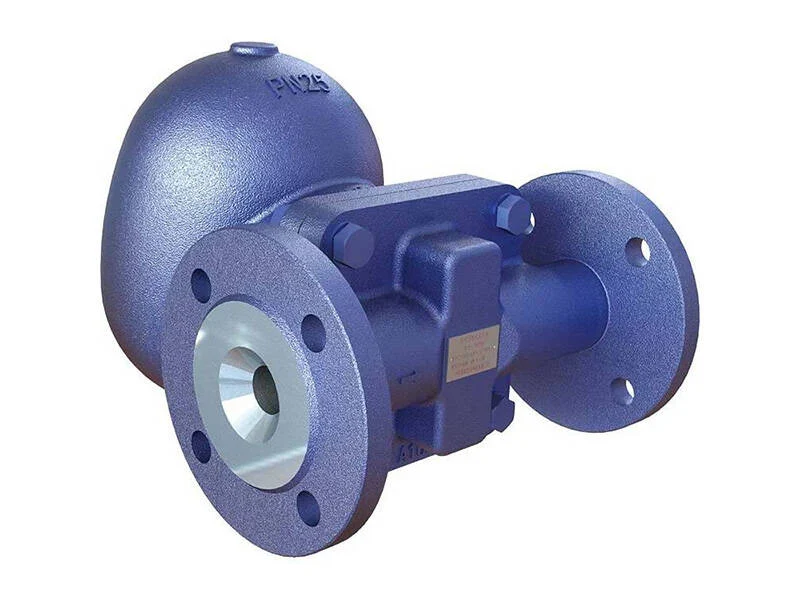
In steam systems, the role of steam traps in saving energy and improving efficiency cannot be overstated, making the selection of the right trap a key consideration. Among the various types available, float-type steam traps—specifically the free-float and lever-float varieties—are widely favored.
Novices in the field might wonder: with names that sound so similar, which one is actually better? In reality, there is no absolute “better” option; it depends entirely on the specific application scenario.
As both are float-type steam traps, they rely on the buoyancy of a float to sense changes in condensate levels and automatically adjust the valve opening. Both generally provide continuous drainage and stable steam-blocking performance, typically keeping steam leakage rates below 3%—far lower than thermodynamic traps or other types.
The key difference lies in discharge capacity. Lever-float traps use a lever mechanism to amplify the force exerted by the float, generating greater torque for opening and closing the valve; this makes them suitable for high-lift and high-discharge applications. In contrast, free-float traps lack a lever linkage—the float controls the valve directly—resulting in a lower maximum discharge capacity. Consequently, they are better suited for smaller-scale applications, such as compact heat exchangers or branch steam lines with lower condensate loads.
Reliability and fault resistance also differ. Free-float traps feature a simpler structure and are more tolerant of impurities in the condensate, offering a longer service life in conditions where steam quality is average and impurity levels are high. Lever-float traps, however, place constant stress on the lever’s pivot point; poor water quality can lead to sticking or lever deformation, necessitating more frequent maintenance. Therefore, they are best suited for environments with high steam purity and robust maintenance capabilities.
Finally, installation requirements and costs vary. Free-float traps require precise horizontal installation; excessive tilting can cause the float to jam or lead to steam leakage. However, they offer lower initial purchase prices and reduced long-term maintenance costs. Lever-float steam traps offer greater tolerance regarding installation angles—with some models even allowing for tilted installation—though their purchase cost is generally more than 30% higher than that of free-float traps with equivalent discharge capacities.
In summary, both free-float and lever-float steam traps are highly effective at saving energy and boosting efficiency, though they are suited to different applications. Lever-float traps are the preferred choice for operating conditions involving high discharge capacity, high pressure, and high-quality steam. Conversely, free-float traps offer better cost-effectiveness in scenarios requiring lower discharge capacity, less frequent maintenance, and handling steam with higher impurity levels.