

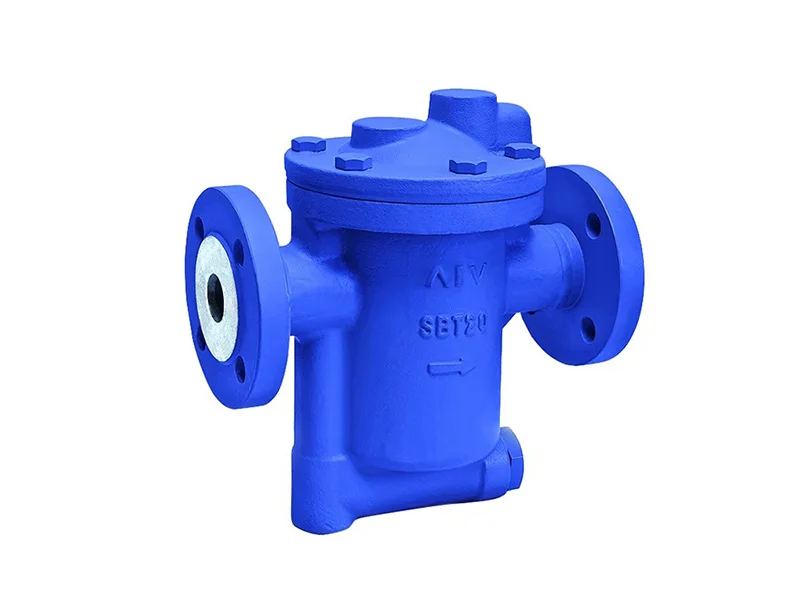
When the latent heat or energy within steam is transferred to the process equipment, the steam condenses into condensate. Failure to effectively remove this condensate from the process flow compromises system efficiency. Relying on manual valve adjustments to drain condensate requires constant modification based on fluctuating steam loads and external environmental conditions, significantly increasing the risk of steam loss.
Steam traps offer a solution to this problem. A steam trap is a device designed to automatically discharge condensate and non-condensable gases (such as air) from heating equipment or steam piping while preventing steam leakage. In essence, it discharges condensate and non-condensable gases without allowing steam to escape.
Working Principles
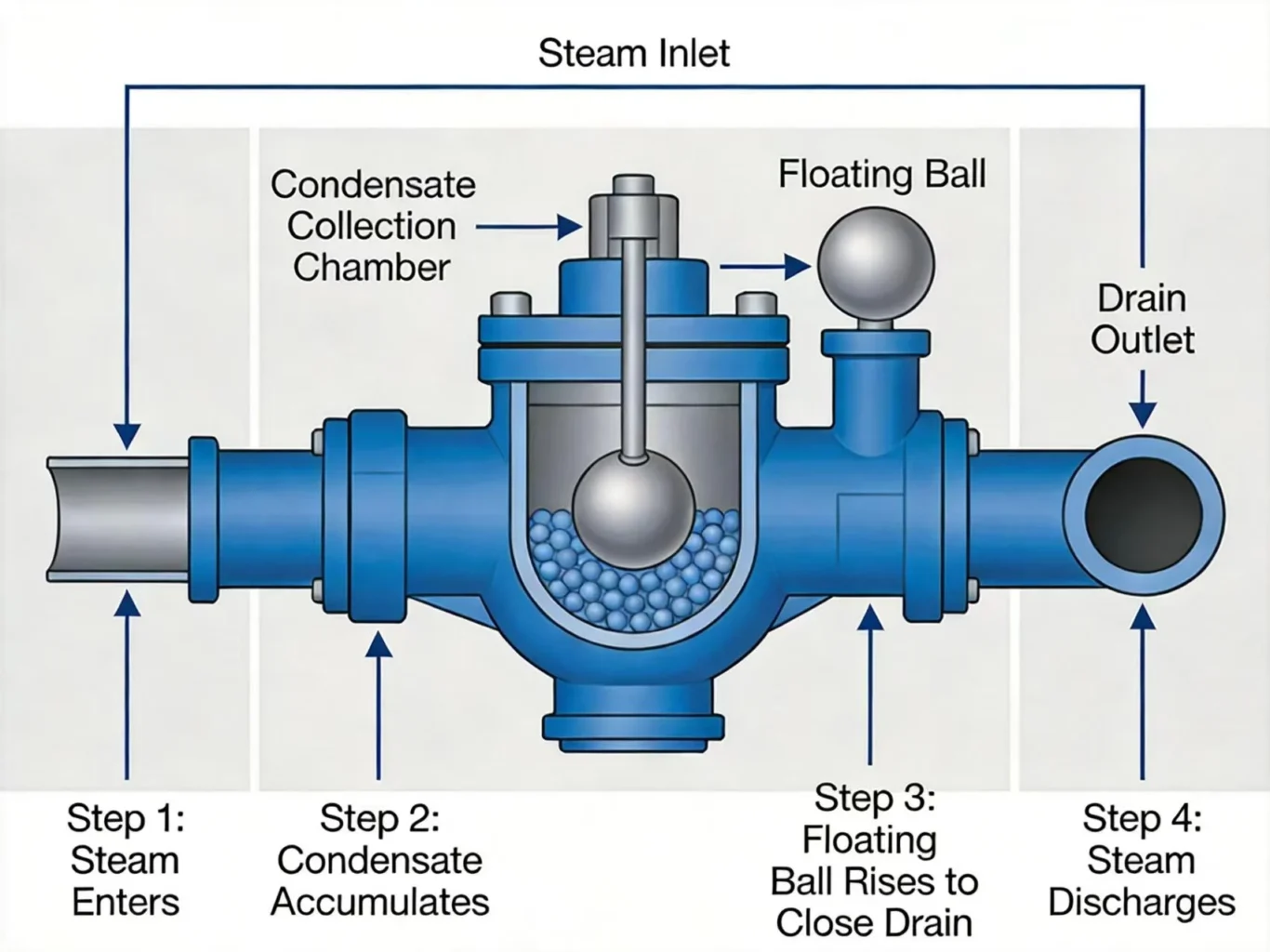
The primary function of a steam trap is to automatically discharge condensate, air, and non-condensable gases from a steam system while minimizing steam leakage. It distinguishes between steam and condensate by utilizing three fundamental physical principles: density difference, temperature difference, and phase change. Based on these principles, steam traps are categorized into three main types: mechanical, thermostatic, and thermodynamic.
Classification
| Major classification | Operation principle | Feature |
| Mechanical steam trap | Specific gravity difference of steam and condensate | Exhaust performance is good.Structure is easy. Service life is long.Enduring a water hammer.Small steam leakage.Intermittent discharge which is excellent in durability. |
| Thermostatic steam trap | Difference in temperature of steam and condensate | Discharge condensate temperature is controllable.Exhaust performance is good.No failure of valve closure.Quiet operation.Enduring water hammer. |
| Thermodynamic steam trap | Thermodynamic characteristic difference ofsteam and condensate | Simple structure.Small and lightweight.Usable for overheated steam.Enduring water hammer. |
Applications
Steam traps are widely used in steam systems across various industries—such as petrochemicals, food and beverage, pharmaceuticals, textile printing and dyeing, power generation, and tobacco—playing a vital role in energy conservation and emission reduction.
Key applications include:
Condensate discharge—This is the most common use of steam traps, primarily involving the removal of condensate formed due to heat loss in steam piping. Thermodynamic steam traps are typically used for this purpose.
Process applications—Float-and-thermostatic steam traps are commonly used in process applications to discharge condensate and air from specific heat-transfer equipment, such as heat exchangers or radiators.
Steam tracing—Steam tracing involves using steam-filled piping or jacketed piping to surround the object being heated, thereby raising the material’s temperature. Heat is transferred as the steam flows around the material. Inverted bucket steam traps are most frequently used for this type of application.