

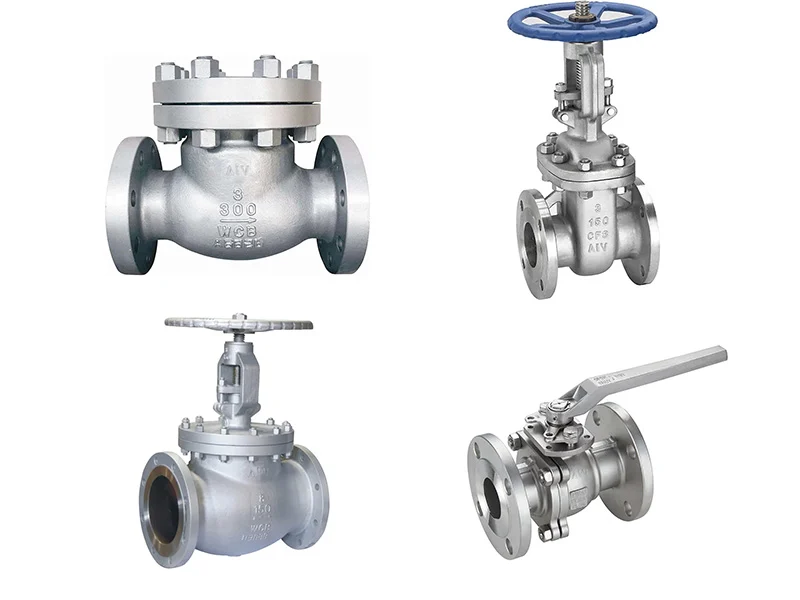
Valves are essential components for controlling the flow of liquids and gases. General industrial valves serve as critical elements in industrial fluid systems, designed to regulate the flow of liquids, gases, or slurries. They are widely used across various sectors, including oil and gas, chemical processing, water treatment, and power generation. There is a broad range of industrial valves—such as gate valves, globe valves, ball valves, and check valves—each engineered to meet specific operational requirements.
Classification of General Industrial Valves
Ball Valves
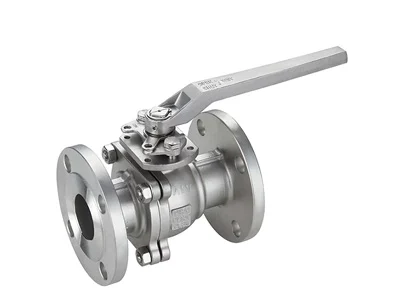
Ball valves are among the most commonly used valves in industrial, commercial, and residential piping systems. They are designed to open, shut off, or regulate the flow of liquids and gases within a pipeline. Thanks to their ease of operation, reliable sealing performance, and long service life, ball valves are extensively utilized in water treatment, oil and gas, chemical processing, HVAC systems, and a wide variety of general industrial applications.
Ball valves supplied by AIV
Technical specification
- Design standard: ASME B16.34,API 608,API 6D
- Fire safe: API 6O7,ISO 10497
- Face to face dimension: ASME B16.10
- Flanged ends: ASME B16.5,ASME B16.47
- BW ends: ASME B16.25
- Test & inspection: API 598,API 6D
Globe Valves
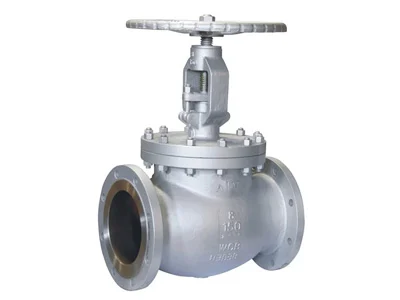
Globe valves are key components in any process requiring a shut-off function. These valves, which typically range in size from 1 mm to 100 mm, are capable of withstanding extremely high pressures and temperatures and are available in a variety of materials. Their design features a needle-like disc (or plug) that moves within the opening of a valve seat; the valve body and disc can be constructed from materials such as cast iron, stainless steel, plastic, brass, or aluminum. To ensure a smooth opening or closing process, the disc is designed to interface with a conical structure inside the valve body.
Globe Valves supplied by AIV
Technical specification
- Design standard: BS 1873,ASME B16.34
- Face to face dimension: ASME B16.10
- Flanged ends: ASME B16.5,ASME B16.25
- Test & inspection: API 598,API 6D
Check Valves
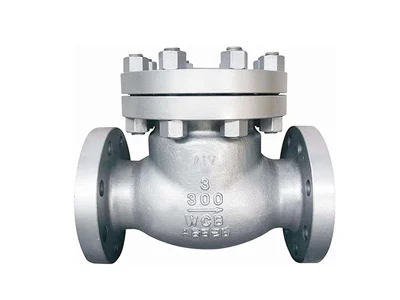
Check valves are vital components in pipelines, industrial installations, and various process systems. As one-way valves, they permit fluid to flow in only one direction while preventing backflow, thereby protecting pumps, equipment, and clean water supply systems. Typically, a check valve remains open under the pressure of the fluid flow and closes automatically when subjected to backpressure or through the weight of its internal closing mechanism.
Check Valves supplied by AIV
Technical specification
- Design standard: BS 1868
- Face to face dimension: ASME B16.10
- Flanged ends: ASME B16.5,ASME B16.25
- Test & inspection: API 598,API 6D
Gate Valves
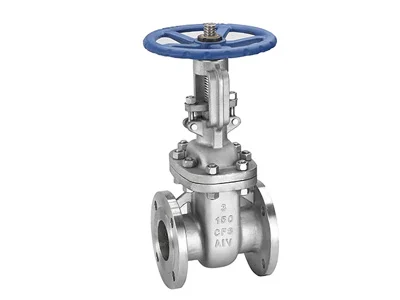
Gate valves are designed to function as isolation valves, controlling the flow of fluids within a pipeline. Installed directly onto a line, they are intended to either allow or completely shut off the flow of water or other types of liquids. Gate valves are manufactured from a wide variety of materials, including stainless steel, cast iron, alloy steel, and forged steel.
The primary function of a gate valve is to initiate or shut off the flow of a fluid (such as water). It operates by moving—or lifting—a circular or rectangular gate out of the fluid passage. When the valve is in the open position, the valve’s bore aligns with the pipe diameter, ensuring an unobstructed flow path. The size of the valve is determined based on the diameter of this bore.
Gate Valves supplied by AIV
Technical specification
- Design standard: API 6OO,API6D
- Face to face dimension: ASME B16.10
- Flanged ends: ASME B16.5,ASME B16.25
- Test & inspection: API 598,API6D
Summary
Understanding the main types of industrial valves facilitates the selection of the most suitable valve for a given application. AIV’s core product offerings include bellows-sealed globe valves, bellows-sealed gate valves, standard globe valves, check valves, and Y-type strainers. These products are widely used in steam systems, thermal oil systems, and hot/cold water systems, as well as in industries such as oil and gas, chemicals, fertilizers, pharmaceuticals, and power generation.