

In industrial manufacturing processes, steam is an indispensable medium, typically supplied from a power plant. Due to the significant distance between the power plant and the factory, steam pressure is prone to substantial fluctuations. Furthermore, the actual steam flow rate within the factory often varies widely. Consequently, it is essential to reduce and stabilize the pressure of the steam entering the facility’s main steam pipeline.
1.What Is a Steam Pressure Reduction System?
A steam pressure reduction system serves as a core unit for regulating steam parameters in thermal engineering. Utilizing pressure-reducing valves and orifice plates as its primary components, the system employs multi-stage throttling—leveraging the Bernoulli effect by altering the steam flow cross-sectional area—to dissipate the potential energy of high-pressure, superheated steam, precisely lowering it to the operating pressure required by downstream steam-consuming equipment.
2.Components of a Steam Pressure Reduction System
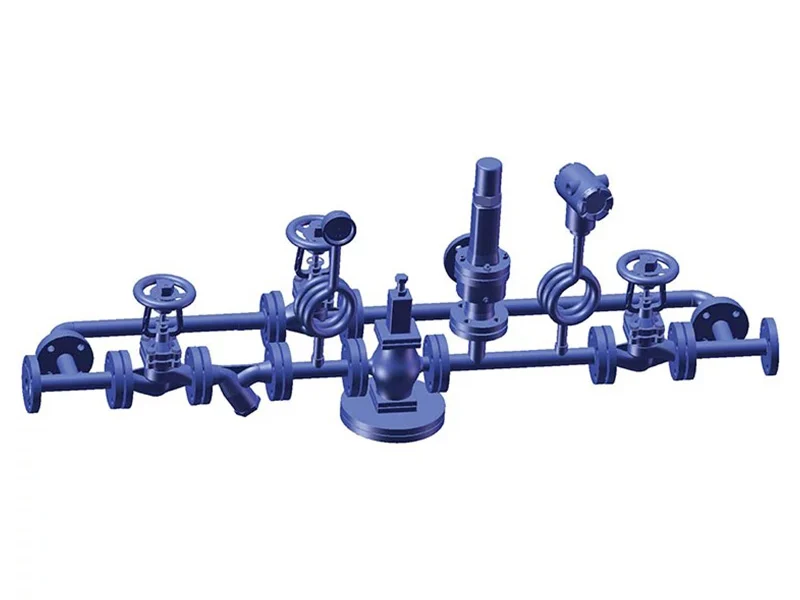
2.1 Core Pressure-Reduction Unit
Main Steam Pressure-Reducing Valve: In most industrial applications, piston-type or pilot-operated diaphragm-type valves are used. These valves regulate pressure by adjusting the throttling gap between the valve plug and the valve seat. Equipped with an integrated pressure-feedback, closed-loop mechanism, they automatically maintain stable downstream pressure without the need for an external power source.
Pressure Setting/Adjustment Components: These include spring-adjustment mechanisms and pilot control piping, which allow for the precise on-site setting of the target outlet pressure to meet the specific requirements of various operating conditions.
2.2 Piping and Isolation Units
Main Steam Piping: High-pressure and low-pressure pipeline sections, connected via flanges and designed to withstand high-temperature, high-pressure steam conditions.
Bypass Piping: A smaller-diameter pipeline installed in parallel with the main pressure-reducing valve. It allows for temporary manual steam supply during maintenance or in the event of a main valve failure, ensuring the continuity of downstream production.
Manual Shut-off Valves: High-temperature steam-rated shut-off valves positioned upstream, downstream, and along the bypass line. These remain fully open during normal operation but can be closed completely to isolate the system for safe maintenance.
Flanges, Elbows, Tees, and Supports: These components facilitate pipeline directional changes, branching for pressure sensing, instrument installation, and the secure mounting of the entire valve assembly (often as a pre-assembled skid), ensuring structural integrity and ease of installation.
2.3 Pressure Monitoring and Remote Transmission Unit
Local Pressure Gauges: Includes one high-pressure gauge (upstream of the valve) and one low-pressure gauge (downstream of the valve) to provide a direct, real-time visual indication of upstream and downstream pressures.
Pressure Gauge Siphons (Pigtail Syphons): Featuring a coiled, ring-shaped design, these components protect the pressure gauges from direct exposure to high-temperature steam and dampen pressure pulsations, significantly extending the service life of the instruments.
Pressure Transmitters: These convert the downstream steam pressure into standard electrical signals, which are transmitted to a central control room to enable remote, real-time monitoring and automated system control.
2.4 Safety Protection Unit
Overpressure Safety Valve/Pressure Relief Assembly: Installed downstream of the pressure-reducing valve, this component automatically opens if a valve malfunction causes downstream pressure to exceed safe limits, venting excess steam. It then automatically reseats and closes once the pressure returns to a safe level.
Upstream Y-Type Strainer: A standard component installed ahead of the pressure-reducing valve to capture impurities such as rust and welding slag, preventing them from jamming the valve core and compromising pressure regulation.
Downstream Steam Trap Assembly: Positioned at the lowest point of the low-pressure piping, this assembly ensures the timely removal of steam condensate, preventing water hammer—which could otherwise damage the internal components of the pressure-reducing valve and downstream equipment.
2.5 Auxiliary Units
Air Vent Valve: Used during initial system startup to expel air from the piping, preventing issues like cavitation that could affect pressure regulation accuracy.
Blowdown/Drain Valve: Allows for the periodic removal of accumulated impurities from the strainer and the bottom of the piping, keeping the system clean.
Temperature Monitoring Component: An optional temperature sensor that provides real-time monitoring of steam temperature, helping to assess steam dryness and overall operating conditions.
In addition to the components mentioned above, the steam pressure-reducing system incorporates a Y-type strainer upstream of the pressure-reducing valve to trap impurities like rust and welding slag, ensuring the valve core does not become jammed. Furthermore, a steam trap assembly is installed at the lowest point of the piping downstream of the pressure-reducing valve to promptly drain condensate; this prevents water hammer from damaging the valve’s internal components and significantly extends the service life of the entire valve assembly.
3.Core Functions of Steam Pressure Reducing Valve Stations
The primary role of a steam pressure reduction system is to establish a fully automated, highly reliable pressure-regulating barrier within an industrial steam network. This ensures the safe, stable, and efficient operation of downstream steam-consuming processes.
3.1Precise Pressure Reduction to Suit Operational Requirements
The system automatically throttles high-pressure, high-temperature steam—supplied by boilers or main steam networks—down to the rated operating pressure required by downstream equipment (such as heat exchangers, production process machinery, or heating systems). This ensures perfect alignment with the design specifications of various pieces of equipment, preventing damage caused by the direct impact of high-pressure steam.
3.2Dynamic Pressure Stabilization to Eliminate Fluctuations
By utilizing a self-acting, closed-loop feedback mechanism, the system maintains downstream steam pressure within a strictly defined, narrow range—regardless of fluctuations in upstream supply pressure or significant changes in downstream steam demand. This prevents the loss of control over production parameters and fluctuations in product quality that can arise from unstable pressure, ensuring consistent operating conditions.
3.3Multi-Layered Safety Framework
The system prevents high-pressure steam from entering low-pressure piping and equipment, thereby averting major safety incidents such as pipe bursts or equipment explosions caused by overpressure.
Integrated overpressure relief components provide a critical fail-safe, rapidly venting pressure in the event of a pressure-reducing valve malfunction.
Upstream filtration and downstream condensate drainage (via steam traps) remove impurities and condensate, protecting downstream equipment from damage caused by water hammer.
3.4Energy Conservation, Cost Reduction, and Efficiency Enhancement
By meeting downstream pressure requirements while allowing upstream boilers to operate at higher, more efficient pressures, the system significantly improves steam transmission efficiency and reduces thermal losses across the network. Furthermore, stable low-pressure steam conditions optimize the heat-exchange efficiency of thermal equipment, eliminating energy waste and lowering overall steam-related energy costs.
3.5Intelligent Operation and Maintenance Support
Equipped with local pressure gauges and remote pressure transmitters, the system captures real-time pressure data and relays it to a central control system. This enables remote, unattended monitoring, drastically reducing the need for manual on-site inspections. It also allows for the proactive identification of potential pressure-regulation issues, thereby enhancing the overall level of automation in the operation and maintenance of the steam system.
Summary
As a professional valve manufacturer, AIV not only provides high-quality valves but also offers comprehensive valve system solutions, ensuring the smooth execution of your projects.