

This article uses a Q&A format to help you better understand the application of steam traps.
What is a steam trap?
A steam trap is a device designed to automatically discharge condensate and air (or other non-condensable gases) from heating equipment or steam piping, while simultaneously preventing the leakage of steam. Steam traps are widely used in steam distribution systems across various industries—including petrochemicals, food and beverage, pharmaceuticals, textiles, power generation, and tobacco—playing a vital role in energy conservation and emission reduction.
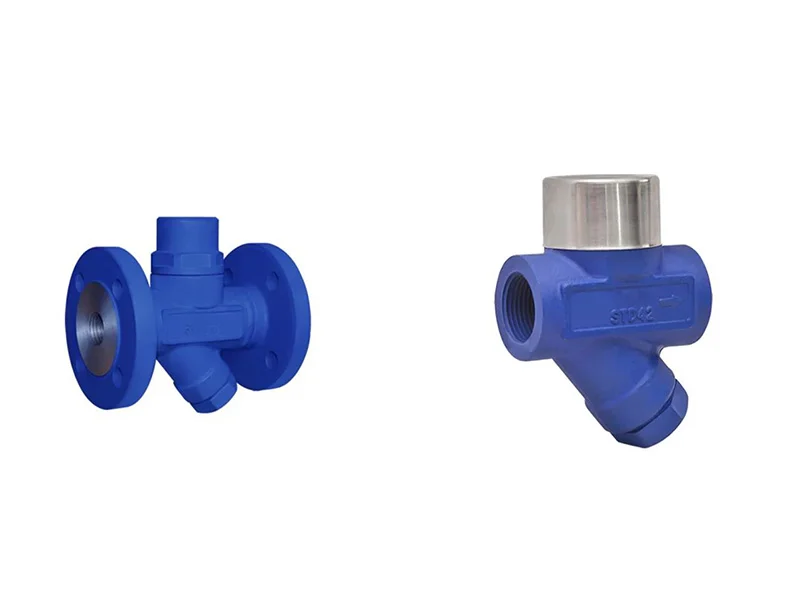
Why are steam traps necessary?
Once the latent heat or energy within steam is transferred to the medium being heated, the steam condenses into liquid water (condensate). If this condensate is not effectively removed from the process system, operational efficiency will suffer, potentially leading to the following issues:
- Water hammer: Sudden pressure surges that can damage pipes, valves, and fittings.
- Corrosion: The accumulation of condensate creates a corrosive environment.
- Reduced efficiency: Condensate hinders heat transfer, slowing down production processes and resulting in energy waste.
- Safety risks: System imbalances or pipe ruptures can pose serious threats to both equipment and personnel.
Relying on manual adjustment of standard valves to drain condensate is both time-consuming and inefficient. Because steam loads and external environmental conditions are constantly changing, manual valves would require frequent adjustment—significantly increasing the risk of steam loss. Steam traps provide an effective solution to this problem.
Steam traps function by automatically retaining steam while discharging condensate. They promptly remove condensate from steam lines, preventing water hammer, and drain condensate from heating equipment, ensuring maximum heat-exchange surface area and thereby improving thermal efficiency.
How do steam traps work?
The core logic of a steam trap lies in its ability to distinguish between media based on the physical differences between steam and condensate. Operating without the need for manual intervention or electrical controls, the device functions through an automatic cycle: it opens rapidly to discharge condensate, then closes immediately upon encountering steam to seal the passage. Simultaneously, it vents air and other non-condensable gases from the system, all while ensuring that no steam escapes.
Mechanical steam traps: These utilize the fact that the density of condensate is hundreds of times greater than that of steam; a float rises or falls with the liquid level, directly actuating the opening or closing of the valve disc.
Thermostatic steam traps: These rely on the temperature difference between condensate and saturated steam, using a temperature-sensitive element that deforms to drive the movement of the valve disc.
Thermodynamic steam traps: These utilize the pressure differential—generated by the difference in flow velocity between steam and condensate—to actuate the opening and closing mechanism.
Industries that utilize steam traps
- Oil and Gas: Steam traps are used in heat exchangers, heat tracing systems, and separation processes.
- Textile Industry: Used in the drying and dyeing of textile products.
- Chemical and Petrochemical: Used for the safe handling of volatile materials under steam-heated conditions.
- Power Generation: Used in steam turbines, condensers, and steam distribution systems.